Micro Endodontics vs Traditional Root Canals – What’s the Difference?

Tooth pain has a way of arriving at the worst possible time. One day you’re enjoying your favorite meal, and the next, even a sip of water sends sharp discomfort through your tooth. When this happens, most patients hear one phrase that instantly creates fear — “You may need a root canal.”
But dentistry has evolved. Today, the conversation is no longer just about root canals. It’s about Micro Endodontics vs Traditional root canal treatment — and understanding the difference can completely change your mindset.
At Dr Deval Mehta™, we believe patients deserve clarity, comfort, and confidence before any dental procedure.
Let’s break it down.
What is a Traditional Root Canal?
A traditional root canal treatment is performed to remove infected pulp (the inner tissue of the tooth), clean the canals, and seal them to prevent further infection.
Why is it needed?
Deep decay
Severe tooth infection
Cracked tooth
Trauma to the tooth
In a traditional procedure:
The dentist uses standard dental instruments.
Cleaning is done based on tactile sense and conventional magnification.
The infected pulp is removed and canals are filled.
While effective, traditional root canals sometimes:
Remove more tooth structure than necessary.
Have limited magnification visibility.
May miss tiny accessory canals in complex cases.
And that’s where Micro Endodontics vs Traditional becomes important.
What is Micro Endodontics?
Micro endodontics is an advanced, precision-based root canal procedure performed using a dental operating microscope and specialized micro-instruments.
Think of it like the difference between standard surgery and microsurgery.
At Dr Deval Mehta™, micro endodontic treatment allows:
Enhanced magnification (up to 25x)
Better illumination
Precise removal of infected tissue
Preservation of healthy tooth structure
Improved long-term success rates
This is not just a “new version” of root canal — it’s a technological upgrade designed for accuracy and patient comfort.
Micro Endodontics vs Traditional: Key Differences
1. Precision
Traditional: Limited magnification
Micro Endodontics: High-powered microscope allows detection of hidden canals and micro-fractures
2. Tooth Preservation
Traditional: Slightly more tooth removal
Micro: Conservative approach, preserving maximum natural tooth
3. Success Rate
Traditional: High success rate
Micro: Even higher long-term success, especially in complex cases
4. Pain & Recovery
Traditional: Mild discomfort post-procedure
Micro: Reduced trauma, often quicker healing
5. Complex Cases
Traditional: May require retreatment if tiny canals are missed
Micro: Better detection reduces retreatment risk
When discussing Micro Endodontics vs Traditional, the key takeaway is precision and long-term stability.
Is Micro Endodontics More Expensive?
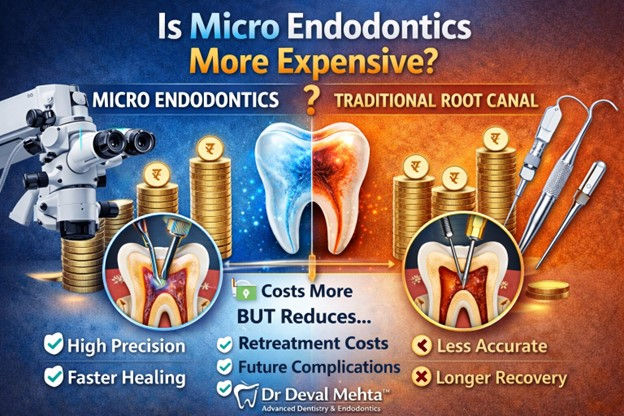
Yes, it can be slightly more expensive due to advanced equipment and expertise. However, it often reduces:
Retreatment costs
Future complications
Tooth loss risks
In dentistry, preserving your natural tooth is always the most cost-effective long-term solution.
When Should You Choose Micro Endodontics?
You should consider micro endodontic treatment if:
You’ve had a failed root canal previously
The infection is complex
The tooth has curved or narrow canals
You want a minimally invasive procedure
You prefer advanced, precision dentistry
At Dr Deval Mehta™, we assess each case individually before recommending the right approach.
The Mindset Shift: Root Canal Isn’t the Enemy
Many patients delay treatment due to fear. But here’s the truth:
Pain comes from infection — not the treatment.
In fact, modern root canal treatment relieves pain. The discomfort patients remember often comes from outdated methods.
With advances like Micro Endodontics vs Traditional, dentistry today is:
More precise
More comfortable
More predictable
Avoiding treatment only allows infection to spread, sometimes leading to swelling, abscess, or even tooth loss.
How to Prevent Needing a Root Canal
The best treatment is prevention. Here’s how you can protect your teeth:
1. Brush Twice Daily
Use a soft-bristled brush and fluoride toothpaste. Brush for 2 minutes.
2. Floss Daily
Flossing removes plaque between teeth where decay often begins.
3. Don’t Ignore Sensitivity
Cold sensitivity or pain while chewing may indicate early infection.
4. Regular Dental Checkups
Visit your dentist every 6 months for cleaning and evaluation.
5. Avoid Delaying Treatment
Small cavities are easy to treat. Deep decay leads to root canal.
At Dr Deval Mehta™, we emphasize early detection to avoid extensive procedures.
Final Thoughts: Micro Endodontics vs Traditional — Which Is Better?
The answer depends on your specific case. However, in terms of:
Precision
Tooth preservation
Long-term success
Comfort
Micro endodontics offers significant advantages.
Understanding Micro Endodontics vs Traditional helps you make an informed, confident decision about your dental health.
If you’re experiencing tooth pain, swelling, or prolonged sensitivity — don’t wait. Early intervention saves teeth.
At Dr Deval Mehta™, we combine expertise with advanced technology to ensure your treatment is precise, safe, and comfortable.
Your natural smile is worth preserving.
Ready to Protect Your Tooth?
Book a consultation with Dr Deval Mehta™ today and discover whether Micro Endodontics is right for you.
Because saving your natural tooth — the right way — makes all the difference.
Directly whatsapp us for an appointment: https://wa.link/endodontist
Visiting Mumbai? Secure your dental slot now; India is the top budget medical destination.
#MicroEndodonticsVsTraditional #RootCanalTreatment #PainlessDentistry #DentalCareIndia #DrDevalMehta #ToothPainRelief #AdvancedDentistry #HealthySmile


Comments